E3E
Thermal energy · DN20–DN80
- PoE / Ethernet
- Clamp-on
- DN20–DN80
E3R · Thermal energy
E3R uses LoRa communication and supports the LoRaWAN protocol: long range, low power consumption, high availability and low cost, which suits many regions.
At a glance
Why E3R
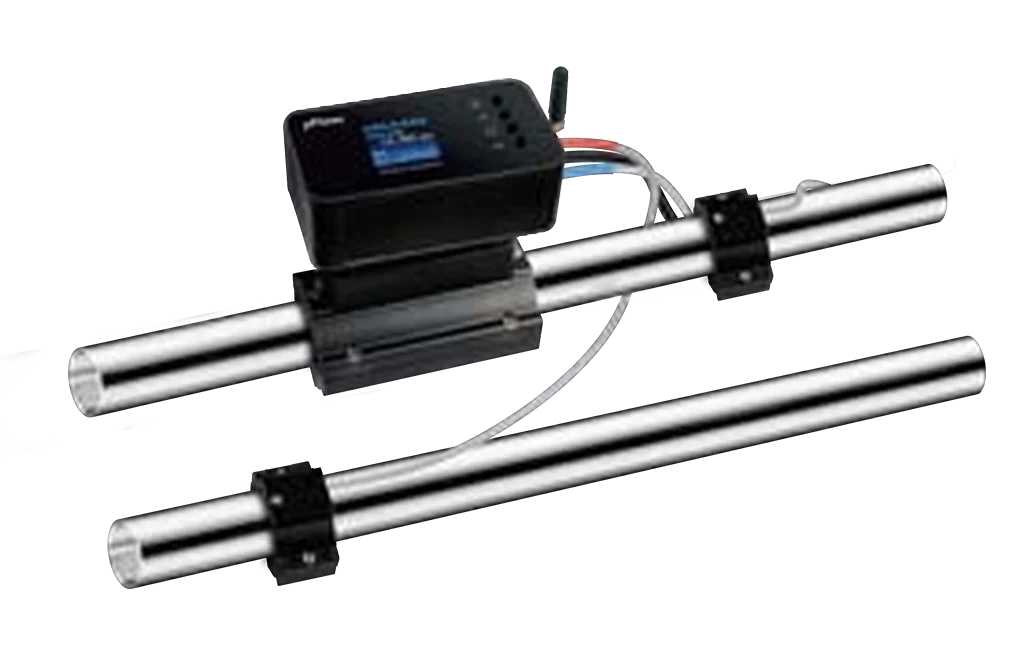
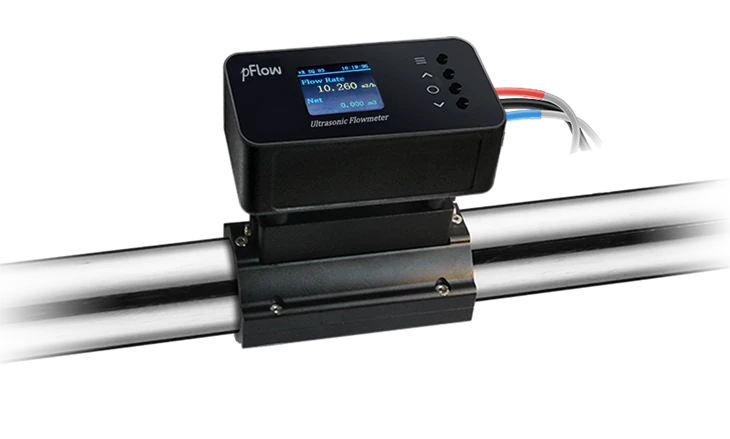
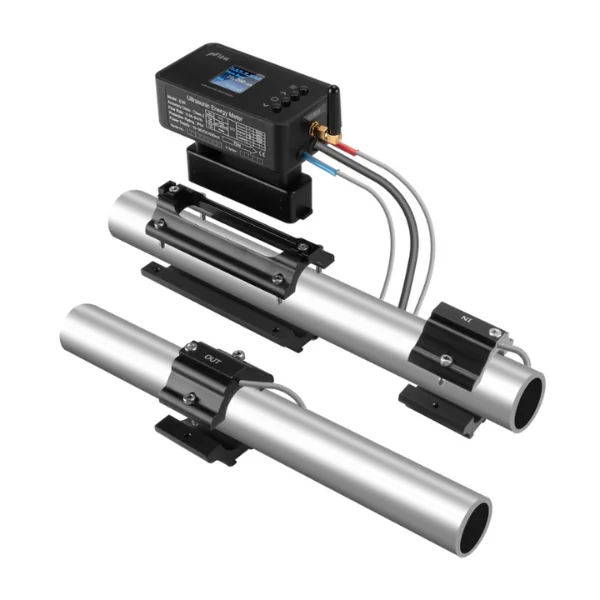
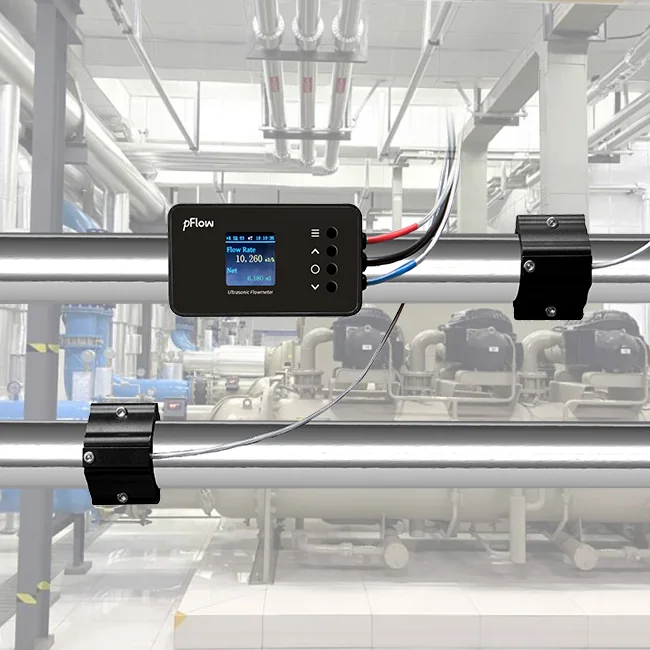
E3R uses LoRa communication and supports the LoRaWAN protocol: long range, low power consumption, high availability and low cost, which suits many regions. It measures with the ultrasonic transit-time method and Gentos’ flow algorithm. The all-in-one clamp-on design installs in four steps with no contact with the fluid.
How it works
Two sensors on the same side of the pipe take turns sending sound through the water. Sound travelling with the flow arrives slightly sooner than sound travelling against it; the meter turns that time difference into flow, which is why it needs to know your pipe.
How clamp-on ultrasonic measurement works →
Pipe & installation
These are set up on the meter after installation. Pipe size and transducer type are decided when ordering.
A smooth metal surface. Clean the spot, add coupling gel, then clamp the sensor on.
Pipe sizes are names, not measurements: a 2″ pipe is 2.375″ across.
This guide shows what a clamp-on meter needs to know about a pipe. It does not mean every model fits every pipe: check the specifications below or ask an engineer.
Specifications
The short version is above. These are the specifications published for E3R; values that are still being checked are left out.
Need a value that is not listed, or the datasheet for your configuration? Ask an engineer.
Documents
No reviewed documents are published for E3R yet.
Request the current datasheet or manual →Compare
Thermal energy · DN20–DN80
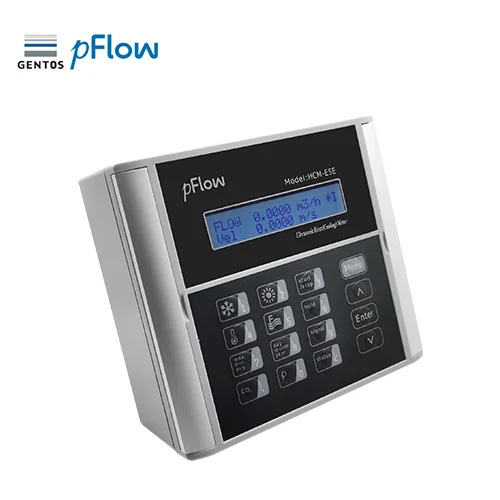
Energy for larger pipework
Thermal energy · RS485 / 4–20 mA
Share your pipe, liquid temperature and connection requirements with our engineers.
Contact Us