Skip to Content

D5 · Specialist

Coolant flow for large CDU systems.

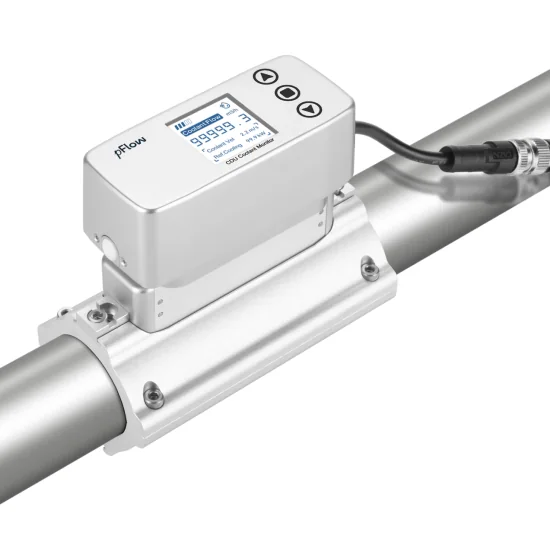
The D5 is a premium monitoring solution for large-scale CDU systems that need maximum flow visibility.
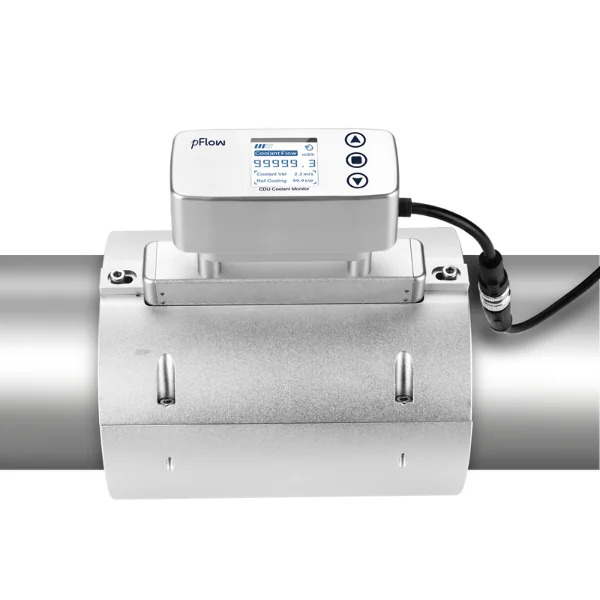
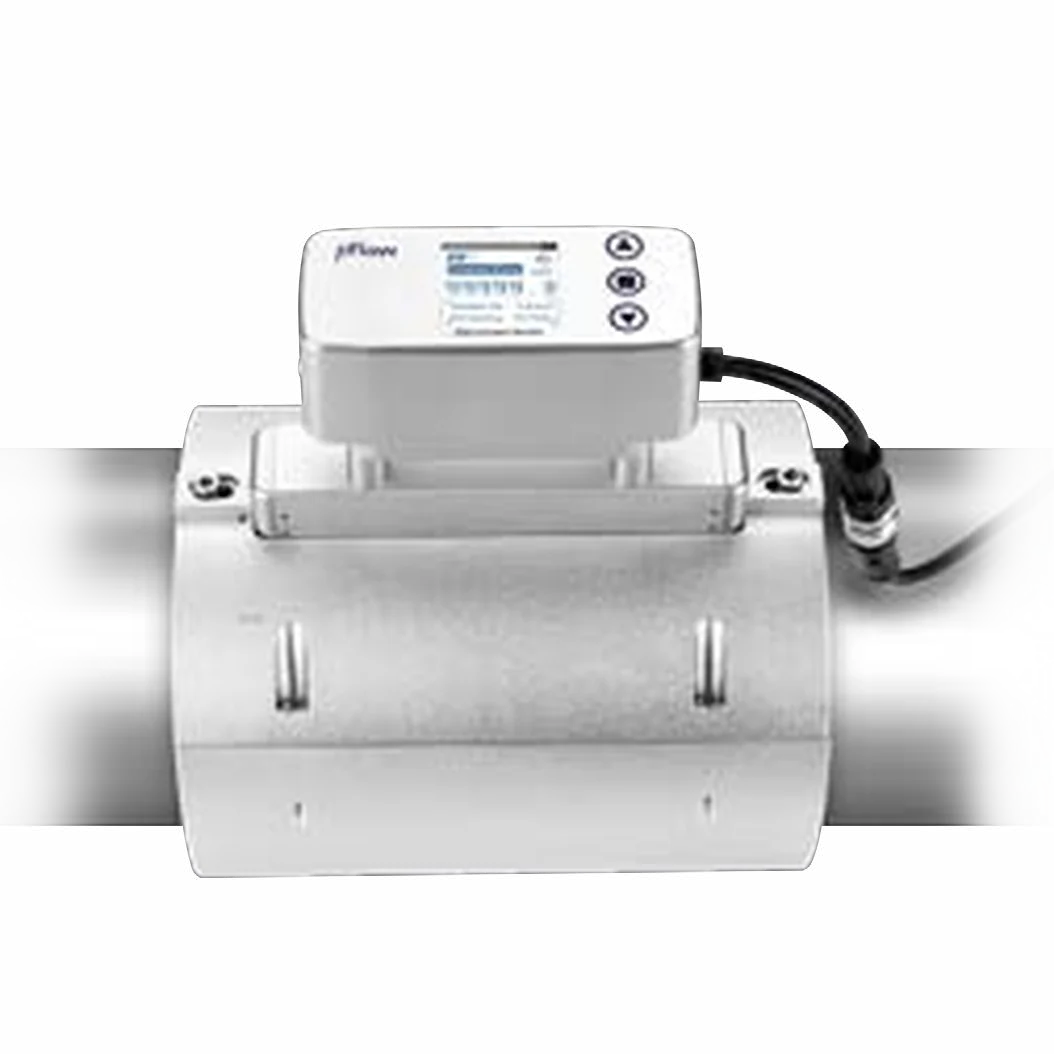
D5 ultrasonic measurement instrument

At a glance

What D5 does, in plain words.

What it measures
Liquid flow
How much liquid moves through the pipe.
How it installs
Clamp-on
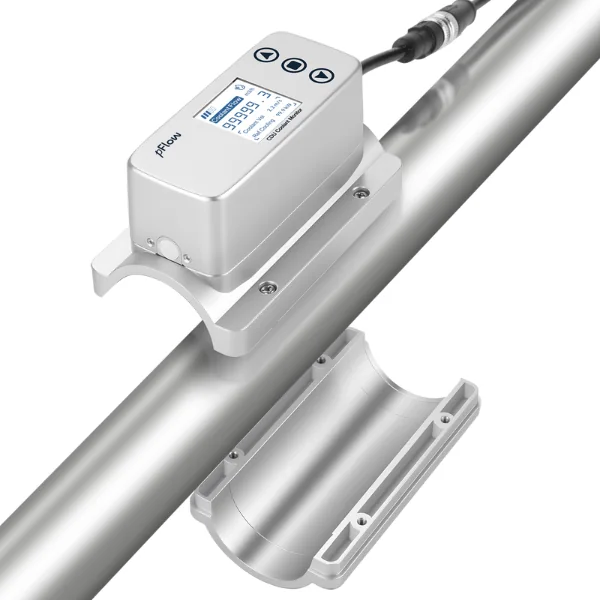
Sensors fit on the outside of the pipe, so the pipe stays closed.
How it connects
RS485 / 4–20 mA
Wired into control systems over Modbus RS485, or as a 4–20 mA signal.
Pipe sizes
DN50–DN150
DN is the nominal pipe size, roughly the inside diameter in millimetres.

Why D5

D5 in short.

The D5 is a premium monitoring solution for large-scale CDU systems that need maximum flow visibility. Enhanced signal stability and versatile connectivity integrate it into data-centre management platforms, and precise, immediate flow data supports proactive maintenance and the energy efficiency of liquid cooling infrastructure.

Where it is used
  • Data centres
  • Liquid cooling

How it works

Sound with the flow arrives sooner.

Two sensors on the same side of the pipe take turns sending sound through the water. Sound travelling with the flow arrives slightly sooner than sound travelling against it; the meter turns that time difference into flow, which is why it needs to know your pipe.

Pipe & installation

What the meter needs to know about your pipe.

These are set up on the meter after installation. Pipe size and transducer type are decided when ordering.

Pipe & installation guide pipe materials, sizes, setup checklist

Stainless steel · 2″ example

A smooth metal surface. Clean the spot, add coupling gel, then clamp the sensor on.

60.3mmacross the outside
2.8mmwall thickness
54.8mmacross the inside

Pipe sizes are names, not measurements: a 2″ pipe is 2.375″ across.

The meter needs Pipe size Wall thickness Material: Stainless steel
Technical details standards, OD / ID, both units
Standard
ASME B36.19 · 2″ Sch 10S
Outside diameter (OD)
2.375″ (60.33 mm)
Wall
0.109″ (2.77 mm)
Inside diameter (ID)
2.157″ (54.79 mm)
Meter parameters
OD · wall · material

This guide shows what a clamp-on meter needs to know about a pipe. It does not mean every model fits every pipe: check the specifications below or ask an engineer.

Specifications

Check the fit before you specify.

The short version is above. These are the specifications published for D5; values that are still being checked are left out.

Performance

Flow velocity
0.3–5.0 m/s (1.0–16 ft/s)
Pipe sizes
DN50, DN65, DN80, DN100, DN125, DN150
Accuracy
±2% of reading (0.3–5.0 m/s)
Repeatability
0.4%
Medium
Water, deionized water, ethylene glycol–water mixture, propylene glycol–water mixture, oil-based coolant, fluorocarbon fluid
Coolant concentration
Confirmed with the customer for each project
Application
Data-centre liquid cooling
Pipe material
Stainless steel

Function

Analogue output
4–20 mA, max. load 500 Ω
Communication
RS485 with Modbus protocol
Power supply
10–36 VDC, 500 mA max.

Physical

Ambient temperature
−10 °C to 50 °C (14 °F to 122 °F)
Transducer temperature
0 °C to 60 °C (32 °F to 140 °F)
Ingress protection
IP65
Transducer cable
φ5 six-core cable, 2 m (6.6 ft) standard

Need a value that is not listed, or the datasheet for your configuration? Ask an engineer.

What these terms mean
DN
Nominal pipe size, roughly the inside diameter in millimetres (DN50 ≈ 50 mm).
Clamp-on
Sensors strap to the outside of the pipe. No cutting, no shutdown for installation.
PoE
Power over Ethernet: one network cable carries power and data.
LoRaWAN
Long-range, low-power wireless. Readings travel through a gateway to a network server.
Modbus RS485
A wired connection widely used by building and industrial control systems.
4–20 mA
An analogue signal where the current represents the reading.

Documents

Datasheets and manuals.

No reviewed documents are published for D5 yet.

Request the current datasheet or manual →

Compare

A different job may need a different meter.

Compare D5 with others

Is this the right meter for your system?

Share your pipe, liquid temperature and connection requirements with our engineers.

Contact Us